
500 Casino withdrawals: wallets, fees and processing
 Available in GB
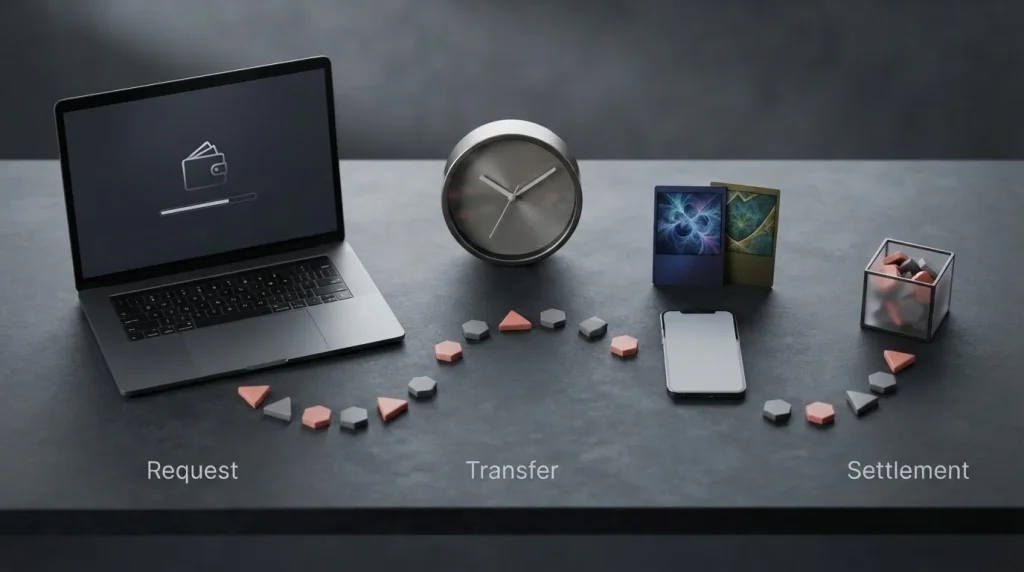
500 Casino describes cryptocurrency and virtual-item routes for withdrawals, while its funding system also takes account of separate coin ledgers and the MAIN balance. An outgoing request can involve account eligibility, destination-wallet checks, an operator dispatch decision and blockchain settlement. These steps have different consequences for timing, cost and control of funds. The casino’s public help material names Bitcoin, Ethereum, Litecoin, XRP and Tether as withdrawal currencies, alongside P2P skin items. Its payment model does not offer a direct cash withdrawal into an ordinary fiat payment method. The essential distinction is between a balance displayed inside the account and value finally received by an independently controlled wallet or item inventory.
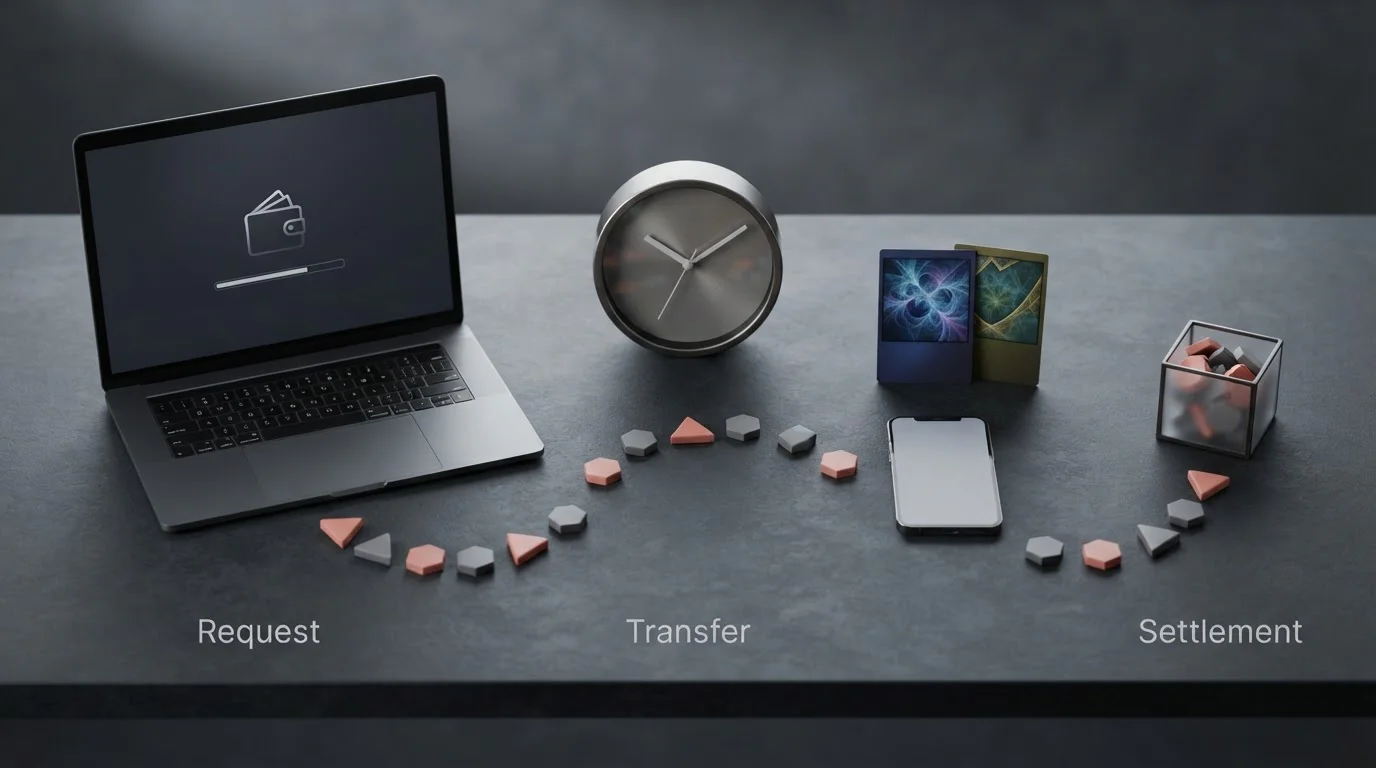
Table of Contents
- Why a crypto withdrawal can deliver less than its displayed amount
- From account eligibility to blockchain settlement
- Skin withdrawals use an item market, not a bank payout
- How wallet ownership and payment checks affect cashout
- BTC, ETH, LTC, XRP and USDT as outgoing assets
- Common questions about withdrawals
- Wallet ownership and transfer costs drive cashout friction
Why a crypto withdrawal can deliver less than its displayed amount
500 Casino’s cryptocurrency help describes transaction or network fees being deducted from the amount received. The fee can vary by currency and network conditions, and the operator says that certain currencies may carry no withdrawal fee in some circumstances. Consequently, an amount entered into a withdrawal request and the amount arriving in a receiving wallet need not be identical. Fees belong to the transfer process, not to the mathematics of the casino games that produced the account balance.
A blockchain fee is fundamentally different from a game’s house edge. The house edge describes a long-run expected share of wagering; a network fee is an expense associated with moving assets. Someone can have a profitable individual gambling session and still lose value through conversion costs, a changing crypto price or fees deducted along the way. Conversely, a low network fee says nothing about the fairness or expected return of the gambling activity.
| Cost or value change | Where it arises | What it changes |
|---|---|---|
| Blockchain transfer fee | Movement from a sender to a wallet | Net quantity received |
| Market-price movement | Value of the cryptoasset over time | Fiat equivalent of the balance |
| External conversion costs | Conversion outside the casino | Proceeds after an exchange or sale |
| Game house edge | Underlying wagers | Long-run theoretical betting return |
These categories should not be compressed into a single invented withdrawal percentage. 500 Casino’s operator help frames fees as currency- and time-dependent. The payments and balance guide explains how deposits are recorded before the outgoing transfer stage, including the distinction between asset ledgers and the MAIN balance.
From account eligibility to blockchain settlement
A withdrawal has stages, so “processed” and “received” are not interchangeable. First, an account must meet the conditions governing an outgoing request. The current operator Terms refer to deposit turnover and identity or funding checks. Second, the request is submitted within the account’s payment system. Third, the casino decides whether it can dispatch the transaction or whether the case requires additional review. Finally, the transfer is processed by the selected blockchain and the recipient’s wallet recognises the result.
- Account readiness: eligibility, balance classification and any verification requirements are assessed.
- Withdrawal request: the chosen eligible asset and destination information are recorded for processing.
- Operator dispatch: the transaction is sent, or an account or payment review intervenes.
- Network settlement: blockchain confirmation and recognition by the receiving service take place outside the casino’s direct control.
The 500 Casino help centre describes crypto withdrawals as generally dispatched immediately. That is the operator’s description of its dispatch process, not a promised time by which another wallet will have spendable funds. The same help material allows manual examination of flagged withdrawals. A completed transfer is affected by the network’s processing state and by any additional confirmation policy of the receiving wallet or exchange.
This separation matters especially when timing is presented as a single number. The request stage can pause for account-related reasons even if the blockchain is functioning normally; a transaction can be sent successfully while the recipient is still waiting for confirmations. Likewise, a transfer displayed in a network explorer is different from an exchange having completed any additional review or credit process. A fast sending step cannot eliminate the subsequent stages.
The operator’s current Terms state a one-times turnover requirement on deposits before withdrawal. Its older help material describes turnover conditions as depending on the deposit method, so the current Terms are the appropriate reference for the operator’s stated rule. Deposit turnover concerns the handling of funds after they enter the account and is distinct from the additional wagering rules associated with a promotional bonus balance.
When an outgoing request is held for identity review, it belongs to the account-control process rather than the blockchain step. The account verification and security guide explains the document categories and the operator’s response window for supplying requested material. Neither an account review deadline nor a nominal dispatch description is a universal clock for completed withdrawals.
Skin withdrawals use an item market, not a bank payout
500 Casino’s payment ecosystem incorporates CS2 and Rust items through P2P or marketplace-style processes. That creates a second outgoing route alongside cryptocurrency. A skin item has a game-related identity and a market valuation, rather than being an amount of fiat money sent through a card, bank or e-wallet. The operator describes cashout through cryptocurrency or supported skin items, not direct real-money withdrawal to a fiat rail.
The distinction changes what “value received” means. In a crypto withdrawal, the transfer produces a quantity of an asset at a wallet address. In an item withdrawal, the result is an inventory object whose practical value depends on the particular item and what another party may pay for it. An item displayed at one market valuation is not a promise that it can instantly be sold elsewhere at that amount. Availability of buyers, marketplace fees and changes in demand can affect an eventual sale independently of the casino session.
Steam-linked item transfers also bring account and security considerations that do not apply to a direct blockchain transfer. An inventory account, a trading identity and a game item are separate from the casino’s internal balance. Protecting those linked accounts and recognising impersonation or substituted trade requests matter because a correctly requested item can still be lost through control of the wrong receiving account or acceptance of an incorrect trade.
- Cryptocurrency route: receipt is an asset transfer to a compatible wallet and may involve network confirmation and fees.
- Skin route: receipt is an item through a marketplace or trading process, with a market-dependent valuation.
- Fiat funding: the presence of fiat deposits does not turn an outgoing skin or crypto transfer into a bank cashout.
The format of the prize can obscure the underlying risk. An item prize may look like a collectible rather than a cash figure, yet the original wager still put economic value at risk. Likewise, a high estimated skin value can shrink when converted into spendable proceeds through a third-party marketplace. The sensible comparison is between the object or asset actually delivered and the costs of eventually using or selling it, rather than assuming each payment route ends with cash in a bank account.
How wallet ownership and payment checks affect cashout
500 Casino’s current Terms describe returning cryptocurrency to the wallet used for the deposit and allowing additional verification if a different destination is proposed. They also prohibit the use of third-party wallets. The underlying concern is control of the funding and receiving instruments: a balance inside an account does not automatically establish that every external address supplied for its transfer belongs to that account holder.
An address is not an identity document. It is a destination identifier on a blockchain, and possession of its text does not prove ownership of the private keys or the account at a custodial service. A user could inadvertently enter an address controlled by another person, confuse a token with an incompatible receiving asset or copy information from a fraudulent message. These are separate hazards from whether a withdrawal meets the casino’s internal eligibility rules.
The operator’s verification policy can involve identification, proof of address and payment-related evidence. Such checks serve a different purpose from the authenticator used to protect login access. Two-factor authentication helps stop someone using stolen login credentials; wallet ownership checks concern where value goes. Even a well-protected casino account cannot reverse an irreversible blockchain payment after value is sent to a mistaken recipient.
Address and network compatibility require particular care as general blockchain principles. A ticker alone does not identify every possible token network or address format. Because the account-specific network route determines how a transfer is encoded and received, a destination must be compatible with the actual outgoing transfer. The operator’s named coin list does not imply that every implementation of every token network is selectable in its payment flow.
For questions about a contested transaction after internal support, the complaints and player recourse information describes the appropriate formal route. The ordinary mechanics of wallet review remain part of payment security, not a statement that any particular withdrawal will be approved or returned.
BTC, ETH, LTC, XRP and USDT as outgoing assets
500 Casino’s official payment help names Bitcoin, Ethereum, Litecoin, XRP and Tether among its cryptocurrency withdrawal options. These are different assets with different market behaviour. The common feature in the withdrawal context is that a payout is denominated in a supported asset rather than directly in bank-account cash. Which balance is being debited and how the receiving destination is controlled determine what the request represents.
The operator also separates some incoming cryptocurrency into coin-specific balances, while fiat-funded and skin-funded deposits contribute to a MAIN balance. Its help material describes MAIN as having crypto or skin exit routes and coin-specific balances as subject to their own asset-handling rules. Current Terms concerning the originating payment method and wallet checks can add conditions to the way an outgoing route is used. The account’s nominal balance figure therefore cannot be interpreted independently from the type of funds behind it.
| Named payout asset | Asset type | Practical consideration |
|---|---|---|
| Bitcoin (BTC) | Cryptocurrency | Receiving wallet and blockchain confirmation |
| Ethereum (ETH) | Cryptocurrency | Destination compatibility and market movement |
| Litecoin (LTC) | Cryptocurrency | Transfer cost and network settlement |
| XRP | Cryptocurrency | Receiving-service address requirements |
| Tether (USDT) | Stablecoin token | Exact supported token-transfer route |
The relevant distinction is not simply whether an asset belongs to the list. It is whether an eligible internal balance can be transferred through the intended route, what value will be deducted as fees and how the recipient will recognise the asset. A coin named in a general payment explanation does not establish an unrestricted transfer path for every account, location or payment arrangement.
Cryptocurrency payout mechanics and skin-item transactions share a common: both end in an asset with its own custody or market conditions. Neither is equivalent to a conventional direct fiat cashout. The timing of the operator’s dispatch, settlement on the network and any later conversion are separate operations; changing the denomination of a balance does not make those distinctions disappear.
Common questions about withdrawals
Can 500 Casino send a withdrawal directly to a bank account?
The operator describes cryptocurrency and P2P skin-item withdrawals rather than direct real-money cashouts to a bank or card. Receiving crypto or an item is a separate step from converting it into fiat money.
Does an immediate crypto dispatch mean immediate receipt?
No. The operator describes fast dispatch, but some requests may undergo manual review. Blockchain confirmations and receiving-service processing take place after a transaction is sent.
Why does the original deposit wallet matter?
The current operator Terms describe returning cryptocurrency to the depositing wallet, with enhanced checks for another destination and restrictions on third-party wallets.
Are cryptocurrency withdrawal fees fixed?
The operator describes fees that depend on the currency and transfer conditions. They may reduce the received amount, and some currencies may have no withdrawal fee in particular circumstances.
Wallet ownership and transfer costs drive cashout friction
500 Casino’s cashout model is best understood as a sequence of account review, selection of an eligible asset, operator dispatch and final transfer. Crypto payments involve wallet and network risk; skins involve item custody and market valuation. The official payment materials also distinguish internal balance types from the external asset ultimately received. Those mechanics help explain why a statement about sending speed cannot stand in for a guaranteed receipt time or amount.
For any payment route, the economically meaningful result is the asset under the recipient’s control after applicable costs, not the headline figure displayed before transfer. Gambling losses, crypto price changes and transfer irreversibility remain distinct risks throughout that sequence.
500 Casino games: originals, live tables and slots

500 Casino payments: coins, skins and account balances
500 Casino Notes 500 Casino blends cryptocurrency with real-money deposit channels and virtual-item trading. A...

500 Casino games: originals, live tables and slots
500 Casino Notes 500 Casino combines conventional casino categories with a distinctive selection of 500-branded...

500 Casino bonus terms: rakeback, spins and wagering
500 Casino Notes 500 Casino's international welcome package combines a rakeback boost, a set of...

500 Casino licence and UK casino availability
500 Casino Notes The company behind 500 Casino holds an international Curaçao authorisation, while its...